

What TPO Roofing Actually Involves
TPO vs EPDM vs PVC at a glance
| Spec | TPO | EPDM | PVC |
|---|---|---|---|
| Surface color | White (default), gray, tan | Black, occasional white | White (default), gray |
| Reflectivity | High (70–80%) | Low | High (70–80%) |
| Service life | 20–30 years | 25–30 years | 25–30 years |
| Installed cost (per sq ft) | $4–$10 | $6–$12 | $8–$15 |
| Seam method | Hot-air weld | Adhesive tape | Hot-air weld |
| Hail resistance | Strong (with scrim) | Excellent (rubber) | Strong |
| Chemical resistance | Moderate | Good | Excellent |
| Best for | General commercial, energy-conscious roofs | Cold-climate freeze/thaw, ballasted assemblies | Restaurants, chemical plants, food-service |
For most general commercial applications in the Dallas-Fort Worth metro, TPO sits at the cost-performance sweet spot — comparable durability to EPDM and PVC at meaningfully lower installed cost. EPDM wins on extreme cold and chemical-resistance edge cases. PVC wins on chemical-exposure environments. TPO wins everywhere else.
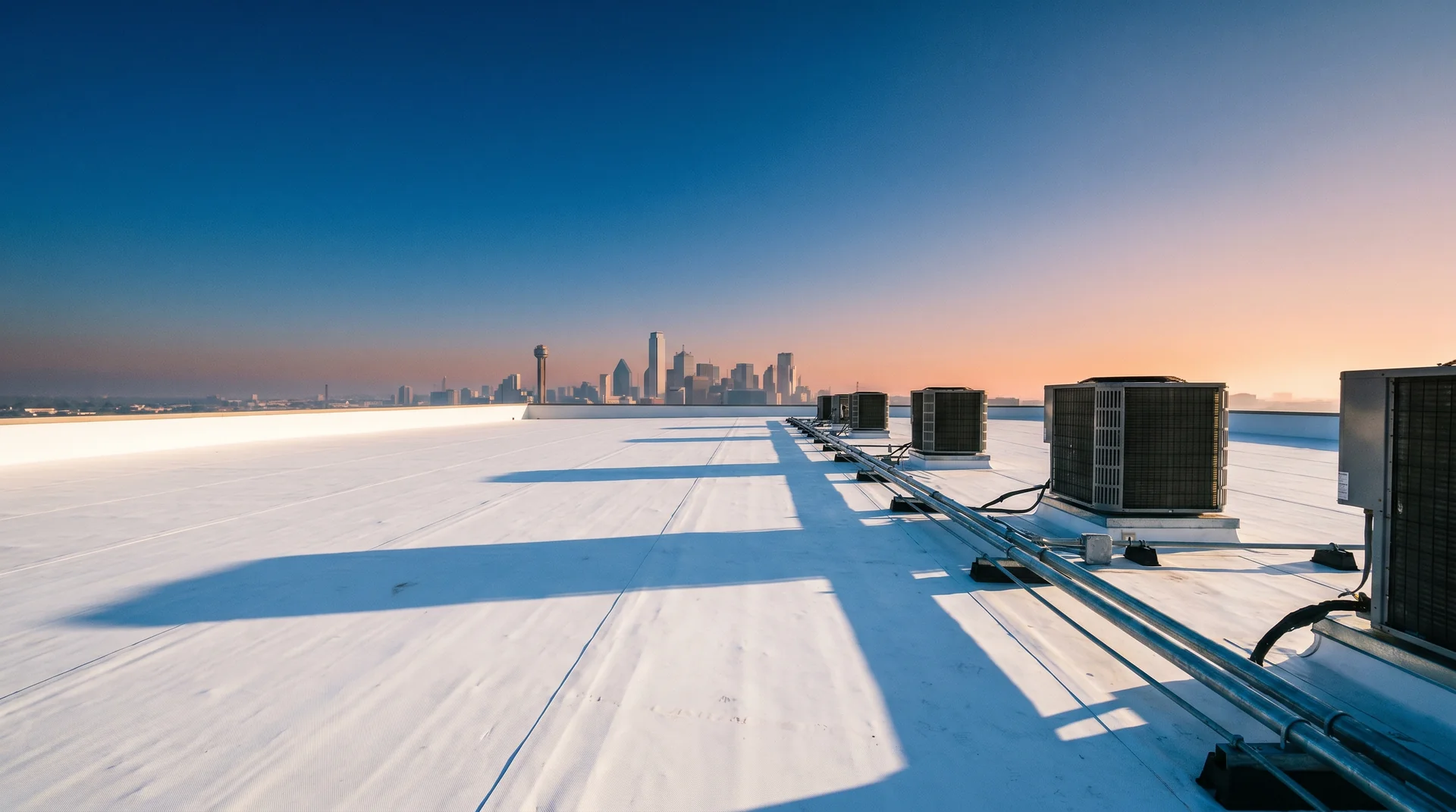
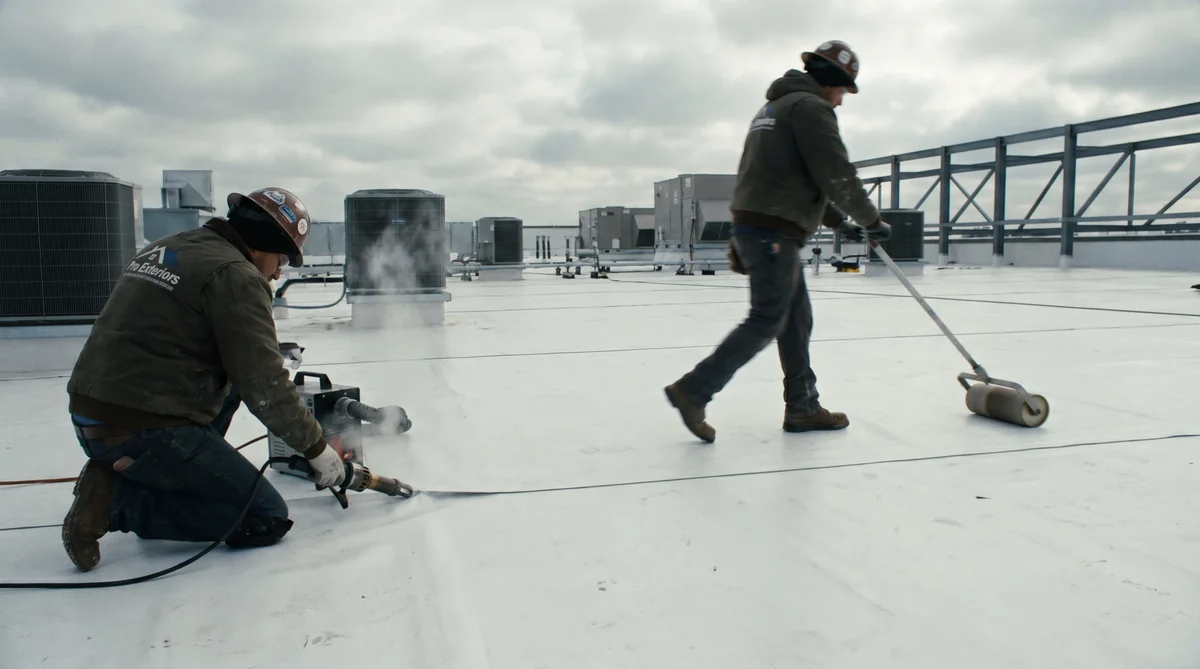
Thermoplastic polyolefin (TPO) is a single-ply commercial roofing membrane manufactured from a polyolefin base — primarily polypropylene and ethylene-propylene rubber — with a reinforcing polyester or fiberglass scrim laminated between two membrane layers. The scrim is what gives TPO its tensile strength; the polyolefin chemistry is what gives it the reflective surface, the chemical resistance, and the heat-weldability that defines the system. TPO membranes are typically specified at 45-mil, 60-mil, or 80-mil thickness; we default to 60-mil for general commercial applications and step up to 80-mil for buildings with significant rooftop foot traffic, hail-belt exposure, or elevated wind-uplift requirements.
Attachment method drives both performance and cost. Mechanically attached systems use fasteners and barbed plates driven through the membrane and insulation to the structural deck — fast, cost-effective, and the right answer for most general commercial roofs in the Dallas wind zone. Fully adhered systems bond the membrane directly to the insulation board with a low-VOC adhesive — tighter assembly, better wind resistance, typically 15–25% higher installed cost. Induction-welded systems (sometimes branded as InvisiWeld or RhinoBond) use hidden plates that bond the membrane via heat without surface penetrations — premium aesthetics, premium cost. Pro Exteriors specifies based on wind uplift requirements and budget, not on what’s fastest to install.
Insulation is inseparable from membrane specification. Polyisocyanurate is the standard for most TPO assemblies, paired with a high-density coverboard (gypsum, polyiso, or wood fiber) directly under the membrane. The coverboard does two things: it improves puncture resistance from above, and it provides a stable substrate for adhesion. We pull cores during the pre-install assessment to verify existing insulation R-value and detect any moisture saturation — TPO installed over wet insulation will fail early, and we don’t take that gamble.
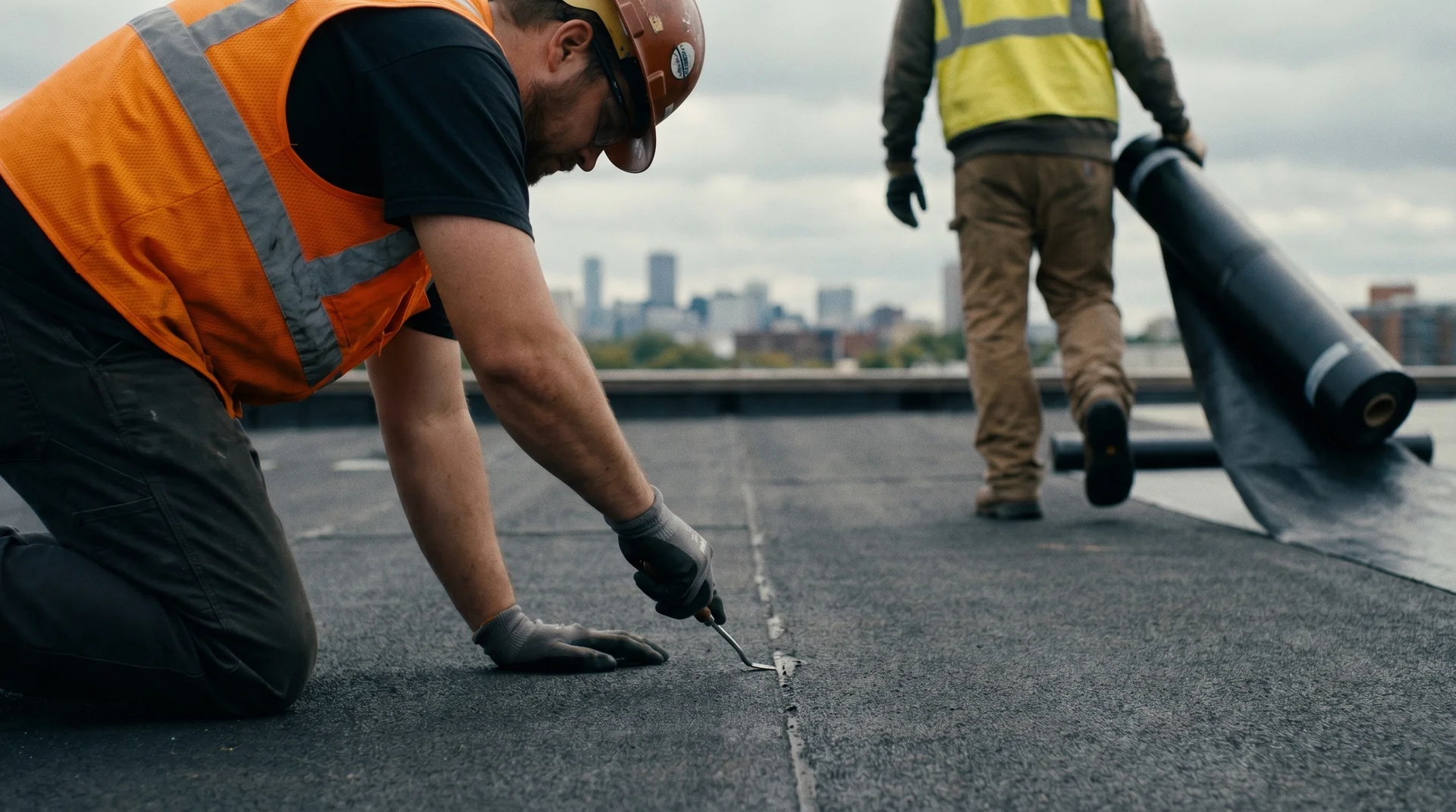
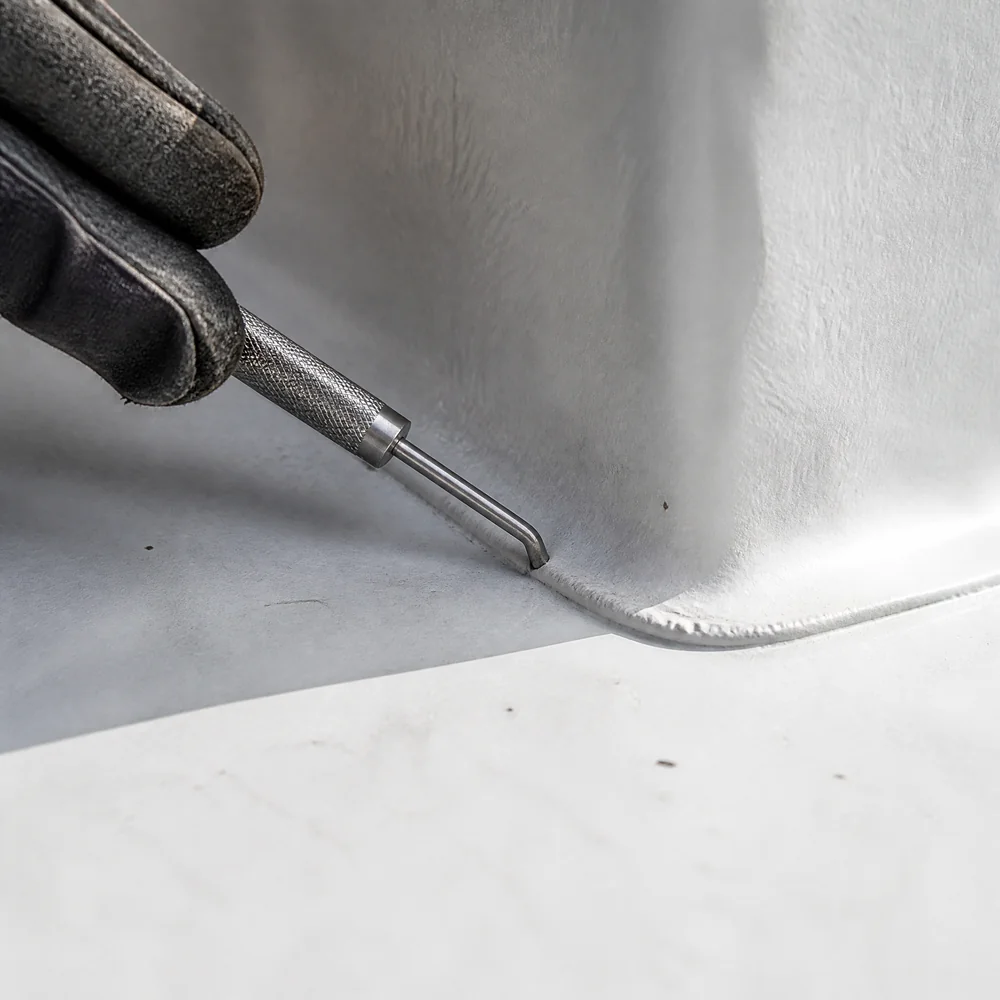
Flashing is where most TPO roofs actually fail. The penetrations — HVAC curbs, vents, drains, parapet wall transitions — accumulate stress from thermal cycling, UV, and incidental traffic in ways the field membrane doesn’t. Pro Exteriors uses prefabricated flashing accessories from the membrane manufacturer wherever possible (factory-cured, dimensionally consistent, fewer field seams) and probe-tests every field-fabricated flashing before sign-off. The flashing detail at a single curb is documented photographically and stays in the project file.
How We Serve Dallas-Fort Worth and the Hail Belt
Pro Exteriors is headquartered in Richardson, Texas — within 30 minutes of any commercial roofing site in the DFW metroplex. That includes Plano, Frisco, McKinney, and Allen on the north side; Arlington, Grand Prairie, and Irving on the west; Garland, Mesquite, and Rockwall on the east; and the major commercial-real-estate corridors of Las Colinas, Legacy West, and the Stemmons Freeway industrial spine. DFW’s combination of 100°F summers, sub-freezing winter snaps, and the highest hail frequency of any major US metro means TPO membrane thickness and attachment method get specified more conservatively here than they would in milder climates.
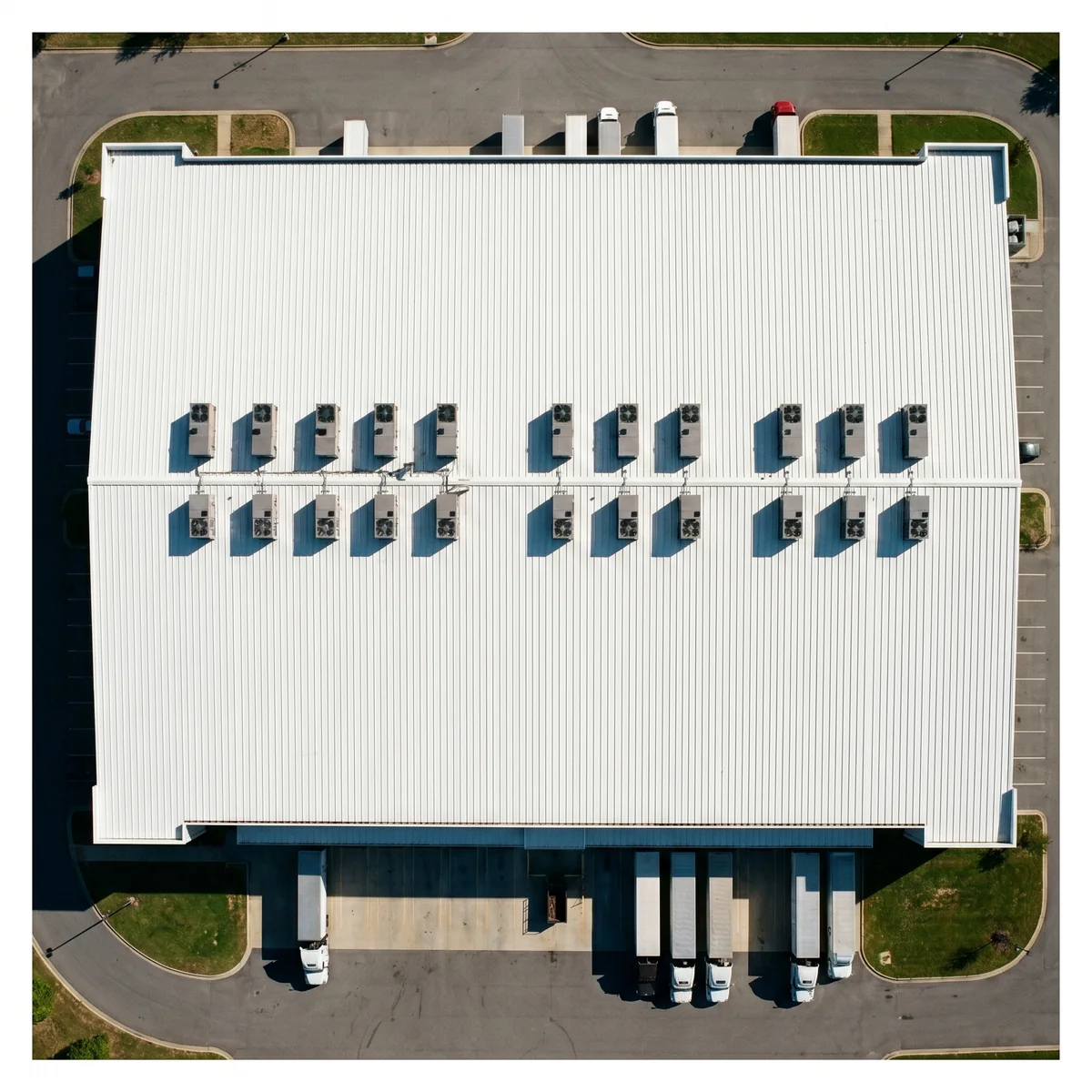
Beyond DFW we maintain regional offices in Denver, CO, Wichita, KS, Kansas City, MO, and Atlanta, GA. Each regional office adapts the spec to local conditions: 80-mil fully adhered for Denver’s mountain UV and high winds; mechanically attached 60-mil for the Wichita and Kansas City markets where wind-zone requirements drive the spec; fully adhered systems with reinforced flashing details for Atlanta’s humidity-driven seam stress. The membrane is the same; the installation answer isn’t.
If your portfolio spans multiple metros — common for distribution-center operators, retail chains, and multi-site property managers — having one contractor who can spec consistently across regional climate zones removes the coordination tax of stitching together five regional vendors. That’s why Pro Exteriors operates the way we do.